
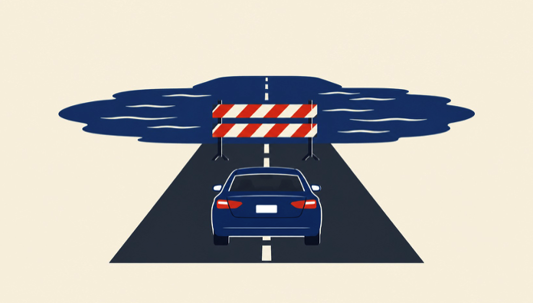
Heavy rainfall, flash flooding, and sudden Arizona road closures confuse drivers and create real danger. If you or someone you love was injured in a crash on a flooded road, whether you drove past a barricade, encountered rising water with no warning, or were struck by another driver, understanding who may be at fault matters. MayesTelles Attorneys, home of the 602- LAWYERS, helps injured people across Arizona sort through the legal, insurance, and evidence issues that follow Arizona personal injury claims involving weather-related accidents.
This article explains how Arizona law handles fault on flooded roads, what deadlines apply, and what evidence to gather right away.
ADOT Flooded Roadway Map:
Check the latest Arizona rain and flooding updates, including reports of flash flooding, heavy rainfall, and any Arizona road closures that could affect your route. https://www.az511.gov/
Who Is at Fault When Someone Crashes on a Flooded Arizona Road?
There is no automatic answer. Fault after a flooded-road accident depends on specific facts, and more than one party may share responsibility.
Potential parties at fault can include:
Arizona Comparative Negligence: Your Fault Does Not Automatically Bar a Claim
Under the Arizona comparative negligence statute (A.R.S. § 12-2505), an injured person's own negligence does not automatically eliminate the right to recover. Instead, damages are reduced by the injured person's percentage of fault, as determined by the fact-finder.
That means even if you made a decision during a flash flood that contributed to the accident, you may still have a viable Phoenix car accident injury claim against another at-fault party.
The "Stupid Motorist Law" and Driving Past a Road Closed Sign
Arizona's so-called "Stupid Motorist Law" (A.R.S. § 28-910) applies when a driver enters a public roadway that is temporarily covered by floodwater and barricaded because of flooding, and the vehicle becomes inoperable. The driver may be charged up to $2,000 for reasonable emergency-response expenses related to that single incident.
A few things to keep in mind:

Who May File, What Damages May Apply, and Filing Deadlines
Who May File
An injured driver, passenger, pedestrian, or other person harmed in a flooded-road accident generally has standing to bring a personal injury claim. In cases involving a death, Arizona wrongful-death actions under A.R.S. § 12-612 may be brought by a surviving spouse, child, parent, guardian, or personal representative on behalf of statutory beneficiaries.
Potential Damages
Depending on the facts, recoverable damages in serious injury claims in Arizona may include:
- Lost wages and diminished earning capacity
- Pain and suffering
- Property damage
- Loss of consortium or companionship in wrongful-death cases
No attorney can guarantee a specific dollar amount. Each case depends on the injuries, evidence, and parties involved.
Deadlines That Cannot Be Missed
Because the 180-day notice window is much shorter than the two-year limitation period, anyone considering a claim against a public entity should seek legal guidance quickly.
Evidence to Protect After a Flooded-Road Accident
The strength of any claim depends on what can be proved. Useful categories of evidence include:
- Witness names and contact information
- Medical records from the scene, hospital, and follow-up care
- Weather alerts, closure notices, and AZ511 records
- Towing, repair, and rental-vehicle records
- Insurance information for all involved parties
- Any communications with public agencies or insurers
Evidence can disappear quickly, especially temporary barricades, water levels, and digital closure records. Documenting conditions as soon as possible strengthens any later claim.
How an Attorney Can Help After a Flooded-Road Crash
Determining fault on a flooded road involves overlapping issues: driver conduct, signage, road maintenance, government immunity, insurance coverage, and comparative negligence.
An experienced personal injury attorney can:
- Identify all potentially responsible parties, including public entities
- Gather and preserve time-sensitive evidence before it is lost
- Handle the 180-day public-entity notice of claim when applicable
- Evaluate insurance coverage, including uninsured or underinsured motorist issues
- Explain how Arizona comparative fault may affect the value of the claim
MayesTelles Attorneys—with more than 200 years of combined experience does not promise a particular outcome but can review the facts and explain available options.

FAQ's:
Who is usually at fault when a driver crashes on a flooded Arizona road?
Fault depends on the facts, including whether the driver ignored a barricade or warning, whether another driver's conduct contributed, and whether a roadway owner or public entity may have failed to address a known dangerous condition. Arizona comparative negligence law can reduce damages according to the injured person's percentage of fault rather than automatically barring the claim.
What happens if someone drives around a Road Closed sign in Arizona?
Under A.R.S. § 28-910, a driver who enters a flooded and barricaded public road and becomes stranded may be liable for reasonable emergency-response expenses, up to $2,000 for one incident. Driving around a barricade may also become evidence relevant to comparative fault in a later injury or property-damage claim, but it does not by itself resolve every party's civil liability.
Can someone bring a claim against ADOT after a flooded-road accident?
Possibly, but a claim against ADOT or another public entity requires fact-specific proof of a legally actionable condition or conduct, causation, and damages, and governmental immunity may apply. Arizona generally requires a public-entity claim to be filed within 180 days after accrual and to include supporting facts and a specific settlement amount under A.R.S. § 12-821.01.
How does Arizona comparative fault reduce an injury settlement?
Arizona follows a pure comparative negligence system under A.R.S. § 12-2505. If a fact-finder determines you were partly at fault, your recoverable damages are reduced by your percentage of fault. For example, a claimant found 30 percent at fault would see a 30 percent reduction in the award. Your claim is not automatically eliminated because you share some responsibility.
How can MayesTelles Attorneys help after a flooded-road accident in Arizona?
MayesTelles Attorneys can review the available crash, warning, roadway, medical, insurance, and weather evidence and explain potential liability issues in a free consultation. Call (602) 714-7900 for general information about possible next steps; the facts and deadlines of an individual claim should be evaluated directly.

Talk to MayesTelles Attorneys About Your Flooded-Road Accident
If you or a family member was hurt in a crash involving flooding, road closures, or missing barricades, time-sensitive deadlines, especially the 180-day public-entity notice window, can affect your ability to seek recovery. MayesTelles Attorneys, home of the 602-LAWYERS, is available 24 hours a day, seven days a week, including weekends and holidays. Call (602) 7147900 or contact MayesTelles Attorneys for a free consultation to discuss the facts of your situation.