
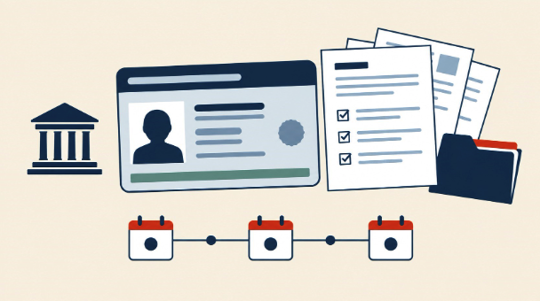
Immediate Steps Before Filing Form I-485
Before you file your Adjustment of Status application, there are several time-sensitive tasks that can affect the success of your case:
Confirm your eligibility category. The filing sequence, required evidence, and even whether you file from inside the United States all depend on which immigrant category applies to you: family-based, employment-based, diversity visa, or another qualifying basis.
Check visa availability. Some categories require a visa number to be available before USCIS will accept a Form I-485. Filing before a visa is available can lead to a rejection.
Schedule your medical exam early. USCIS may reject a Form I-485 that does not include Form I-693 (Report of Medical Examination and Vaccination Record) or the required portion of it when the applicant's category calls for one. Finding a USCIS-designated civil surgeon and completing the green card medical exam requirements before filing can help avoid this problem.
Gather certified criminal records if applicable. If you have ever been arrested, charged, or convicted, even if charges were never formally filed, you may need to obtain certified police and court records. The current Form I-485 instructions describe when these records are required.
Review the current form instructions. USCIS states that its Form I-485 initial evidence checklist is informational and does not replace the statute, regulations, or current form instructions. Always use the most recent instructions for your specific category.
Submitting a complete initial filing may reduce the chance of receiving a Request for Evidence (RFE), which can add weeks or months to the process. However, a complete filing does not guarantee faster adjudication.

The Green Card Application Process Stage by Stage
Most applicants adjusting status inside the United States will move through several stages. The exact path depends on the immigrant category, but the general process includes:
- Immigrant petition or self-petition. Before you can file Form I-485, someone typically files an immigrant petition on your behalf (such as Form I-130 for a family-based case), or you file a qualifying self-petition. In some categories, the petition and adjustment application may be filed at the same time.
- Filing Form I-485. Once eligible and a visa number is available, you submit Form I-485 along with all required supporting documents, fees, photographs, and the medical examination form when applicable.
- Biometrics appointment. After USCIS receives the filing, the agency may send a biometrics appointment notice. At this appointment, USCIS collects fingerprints, photographs, and a signature to verify identity and run background and security checks.
- Possible interview. If USCIS determines an interview is needed, you will receive a notice directing you to appear at a designated USCIS office. USCIS decides whether an interview is required — not every case follows the same path. At the interview, you should bring originals of all documents submitted with Form I-485, including passports, official travel documents, and any Form I-94 records (whether expired or current).
- Decision. USCIS issues a decision approving, denying, or requesting additional evidence on the application.
You can review the full USCIS adjustment-of-status process and interview requirements for additional detail.
Form I-485 Supporting Documents Checklist

Gather Core Documents | Provide Immigrant Evidence | Complete Financial Forms | Include Police Records | Translate Documents |
Collect essential items like photos and ID | Submit proof of eligibility | Fill out Affidavit of Support if needed | Add certified police and court records | Translate any non- English documents |
The specific documents required depend on your immigrant category. According to USCIS' informational initial-evidence checklist, commonly required items may include:
- Two passport-style photographs
- Government-issued photo identification
- Birth certificate or other birth documentation
- Evidence of inspection and admission or parole into the United States, when applicable
- Immigrant-category evidence (for example, an approved petition notice or qualifying relationship evidence)
- Form I-693 or the required partial form, when applicable
- Form I-864 (Affidavit of Support) or Form I-864EZ, when financial sponsorship is required
- Certified police and court records, when applicable
- Translations of any documents not in English
Keep copies of everything you submit. USCIS' checklist is a helpful starting point, but it does not replace the detailed requirements in the form instructions for your particular category.
Applying for a Green Card With a Criminal Record
A criminal charge, arrest, or conviction does not automatically disqualify someone from getting a Green Card, but it can create serious complications. The current Form I-485 instructions require disclosure of criminal history and may require certified police and court records — even for arrests where no charges were formally filed.
The immigration consequences of a criminal record depend on many factors, including:
- The specific criminal conduct involved
- Whether the matter ended in a conviction, dismissal, or other disposition
- The applicant's immigrant category
- Whether a waiver or other form of relief may be available
Because there is no single rule that applies to every criminal record, this area requires individualized legal analysis. You can learn more about Arizona crimes that may create immigration consequences on the MayesTelles legal blog.
How Long Does It Take to Get a Green Card?
There is no universal answer to how long a Green Card application takes. Form I-485 processing time depends on several case-specific factors, including:
- The immigrant category and which USCIS office handles the case
- Whether a visa number is immediately available
- How long biometrics and background checks take
- Whether USCIS schedules an interview
- Whether the agency sends a Request for Evidence and how quickly you respond
USCIS publishes processing-time estimates through its online processing-times tool, but these estimates are averages and include time for biometrics, rescheduling, and responses to evidence requests. It is not safe to rely on a fixed timeline, and estimated processing times change periodically.
How an Immigration Attorney May Help
The Green Card application process involves layered rules that change based on the applicant's immigration status, category, criminal history, family circumstances, and other facts. An experienced immigration attorney can:
- Review eligibility for the correct immigrant category before filing
- Help assemble a complete and organized document package to reduce the chance of an RFE
- Analyze any criminal history for potential admissibility issues and identify available waivers
- Prepare the applicant for what to expect at a green card interview, including which originals to bring
- Monitor processing-time changes and respond to USCIS requests on the applicant's behalf
No attorney can guarantee a particular outcome, but working with counsel who understands the interaction between immigration law, criminal records, and USCIS procedures may reduce preventable delays and missed issues.
FAQ's:
What documents are commonly required for a Green Card application?
Depending on the immigrant category, a Form I-485 filing may require identity documents, birth records, evidence of admission or parole, immigrant-category evidence, photographs, Form I-693 when required, financial sponsorship forms when required, and certified police or court records when applicable. USCIS's initial-evidence checklist is informational, so applicants should always check the current form instructions for their specific category.
What happens after filing Form I-485?
USCIS may send a biometrics appointment notice for fingerprints, photographs, and a signature used for identity verification and background checks. After that, USCIS reviews the filing, may request additional evidence, and decides whether an interview is needed before issuing a final decision.
Can someone apply for a Green Card with a criminal record?
A criminal charge, arrest, or conviction may affect admissibility and usually must be disclosed with certified records when the Form I-485 instructions require them. The effect depends on the specific conduct, the disposition of the case, the immigration category, and any available waiver or other relief, so a criminal record does not produce one automatic immigration outcome.
How long does a Green Card application take?
There is no single processing time for every Form I-485 case. Processing depends on the form, category, USCIS office, visa availability, biometrics, interview decisions, evidence requests, and other case-specific factors. Applicants should check the current USCIS processing times tool rather than rely on a fixed estimate.
How can MayesTelles Attorneys help with an Application for Lawful Permanent Residency?
MayesTelles Attorneys can review the general application process, document preparation, attend the USCIS interview, and review any immigration concerns that may require individualized analysis. People seeking case-specific guidance can request a free, confidential consultation by calling (602)-714-7900.

Talk to MayesTelles Attorneys About Your Green Card Case
If you or a family member are preparing an Adjustment of Status application, or if a criminal record, missed deadline, or USCIS request has made the process more complicated, the experienced attorneys at MayesTelles Attorneys, home of the 602-LAWYERS, are available 24 hours a day, seven days a week, including weekends and holidays. Contact MayesTelles Attorneys for a confidential immigration consultation, or call (602)-714-7900 to schedule a free, confidential consultation today.