
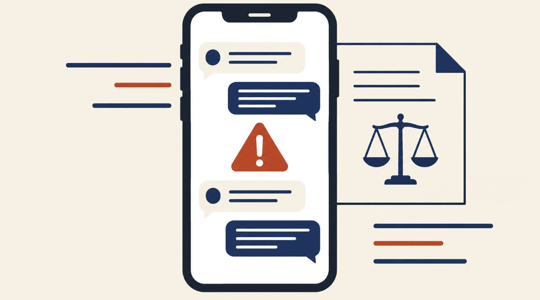
A single message, comment, or direct message on social media can change the course of your life. If you are under investigation or have already been charged with making a criminal threat online in Arizona, the situation is more serious than many people realize. You could face felony charges, jail time, a permanent criminal record, and lasting damage to your career, relationships, and freedom. MayesTelles Attorneys, home of the 602-LAWYERS, helps people across Arizona understand what they are up against and what steps to take right now to protect their rights.
Below, you will find a breakdown of what constitutes a criminal threat online under Arizona law, the process that follows an accusation, potential consequences, and how a criminal defense attorney may be able to help.
What Constitutes a Criminal Threat Online in Arizona
Arizona law does not have a single statute labeled "social media threats." Instead, law enforcement relies on several overlapping statutes to charge people for conduct that takes place on platforms such as Facebook, Instagram, Snapchat, or through text messages and email. The most commonly applied laws include:
- Threatening or intimidating (A.R.S. § 13-1202) — Covers threats of physical harm or serious damage to property directed at another person, whether spoken, written, or transmitted electronically.
- Harassment (A.R.S. § 13-2921) — Includes repeated contact intended to harass, annoy, or alarm, which can apply to persistent messaging or tagging on social media.
- Cyberstalking and stalking (A.R.S. § 13-2923) — Addresses a pattern of conduct directed at a specific person through electronic means that would cause a reasonable person to fear for their safety.
- Computer tampering or misuse of electronic communications — May apply in situations involving unauthorized access, impersonation, or the use of technology to threaten or coerce.
A statement does not need to be a direct, explicit promise of violence. Under Arizona's threatening-or-intimidating statute, even language that a reasonable person would interpret as a serious expression of intent to harm can form the basis for charges. Context matters: prosecutors and law enforcement will look at the wording, the relationship between the people involved, the platform used, and whether the recipient felt genuine fear.
Immediate Steps After Being Accused or Arrested
If law enforcement contacts you or you learn that someone has reported your social media activity, the first hours and days matter. Here is what you should do right away:
- Stop all contact with the alleged victim. Do not respond to their messages, posts, or comments, even to apologize or explain.
- Do not delete posts, messages, or accounts. Destroying evidence can lead to additional charges and will look unfavorable if the case goes to court.
- Exercise your right to remain silent. You are not required to speak with police without an attorney present. Anything you say can be used against you.
- Contact a criminal defense attorney immediately. Early legal guidance can make a significant difference in how your case develops, from the investigation stage through potential charges.
- Preserve your own records. Save screenshots of conversations, the context around the alleged threat, and any communications that show the full picture.
- Follow all court orders. If you receive a protective order or conditions of release, comply with every term even if you disagree.
Time-sensitive deadlines may apply. Arizona courts can issue emergency orders of protection quickly, and criminal charges for cyberstalking in Phoenix or elsewhere in Maricopa County can move fast once a report is filed.
The Criminal Process for Online Threat Charges
Understanding the stages ahead can reduce some of the uncertainty. Here is a general outline of what the process looks like in Arizona:
Investigation
Law enforcement may obtain search warrants for your devices, social media accounts, and electronic records. They may interview the alleged victim, witnesses, and you (if you choose to speak). Digital evidence is often the centerpiece of these cases.
Charges Filed
A prosecutor reviews the evidence and decides whether to file charges. In Maricopa County, this can happen before or after an arrest. Charges may range from a Class 1 misdemeanor to a Class 6 or higher felony, depending on the alleged conduct and the circumstances.
Arraignment and Pre-Trial
At arraignment, you learn the formal charges and enter a plea. Pre-trial hearings follow, during which your attorney can challenge evidence, file motions to suppress improperly obtained digital evidence, and negotiate with the prosecution.
Trial or Resolution
Many cases are resolved through plea negotiations or diversion programs when available. If no agreement is reached, the case proceeds to trial, where the state must prove guilt beyond a reasonable doubt.
Potential Penalties: Can You Go to Jail for a Social Media Post?
Yes. Depending on the charge and circumstances, online harassment laws in Arizona carry real criminal penalties:
- Threatening or intimidating (misdemeanor) — Up to six months in jail, fines, and probation.
- Threatening or intimidating (felony, such as gang-related threats or threats involving schools) — Potential prison time ranging from months to years.
- Harassment (Class 1 misdemeanor) — Up to six months in jail.
- Stalking/cyberstalking (Class 5 felony) — A presumptive prison sentence that can reach several years, with aggravating factors increasing the range.
Repeat offenses, prior felony convictions, and the involvement of minors or domestic relationships can all push penalties higher.
Collateral Consequences Beyond the Courtroom
A conviction for making threats online or cyberstalking does not end when the sentence is complete. Collateral consequences can follow you for years:
- Employment — Many employers run background checks. A threat- or harassment-related conviction can disqualify you from jobs, professional licenses, and security clearances.
- Housing — Landlords and property managers may deny applications based on criminal history.
- Firearms rights — A felony conviction can strip your right to possess a firearm under both Arizona and federal law.
- Immigration — Non-citizens may face deportation, denial of naturalization, or other immigration consequences. If you have immigration concerns, the stakes of a criminal conviction are even higher. MayesTelles has attorneys who handle immigration matters alongside criminal defense.
- Family court — A threat-related conviction or protective order can affect custody and parenting-time decisions.
- Education — College admissions and financial aid can be affected.
- Fingerprint Clearance Card — Certain criminal charges or convictions can prevent you from obtaining or keeping an Arizona fingerprint clearance card, potentially limiting your ability to work in jobs that require one.
Defenses for Making Threats Online
Being accused is not the same as being convicted. Several defenses may apply depending on the facts of your case:
- First Amendment protection — Not all offensive speech is criminal. Arizona courts must distinguish between true threats and protected expression, including political hyperbole, dark humor, or venting.
- Lack of intent — Many threat statutes require the prosecution to prove that the speaker intended to frighten, coerce, or harm. Sarcasm, jokes taken out of context, or misunderstood posts may not meet this standard.
- Insufficient evidence — Screenshots can be altered, accounts can be hacked, and messages can be taken out of context. The state must prove its case beyond a reasonable doubt.
- Mistaken identity — Someone else may have used your account or device.
- No reasonable fear — If the alleged victim did not actually experience fear, or if a reasonable person in their position would not have, the charge may not hold up.
- Constitutional challenges to warrants — If law enforcement obtained your digital evidence through an illegal search or without a proper warrant, that evidence may be suppressed.
Every case is different. A defense that works in one situation may not apply in another, which is why individualized legal analysis matters.
How a Defense Attorney Can Help
Online threat cases involve a mix of technology, free-speech law, and Arizona criminal procedure. The attorneys at MayesTelles, including former prosecutors and former law enforcement, understand how the other side builds these cases—and where weaknesses often exist.
A skilled defense attorney may be able to:
- Challenge the admissibility of digital evidence
- Negotiate reduced charges or diversion when appropriate
- Seek dismissal when the evidence does not support the charge
- Protect your constitutional rights at every stage
- Address collateral consequences, including domestic violence implications and protective order issues
MayesTelles has more than 200 years of combined experience and has secured more than 1,000 acquittals and case dismissals for clients throughout Arizona.

FAQ's:
Can you go to jail for a social media post in Arizona?
Yes. If a social media post meets the legal definition of a criminal threat, harassment, or stalking under Arizona law, you can face misdemeanor or felony charges. Even a single post can lead to arrest, prosecution, and potential jail or prison time depending on the circumstances and your criminal history.
What is the difference between online harassment and cyberstalking under Arizona law?
Harassment under A.R.S. § 13-2921 generally involves repeated conduct intended to annoy, alarm, or harass another person and is charged as a misdemeanor. Cyberstalking under A.R.S.
§ 13-2923 involves a pattern of conduct using electronic means that would cause a reasonable person to fear for their safety, and it is typically charged as a Class 5 felony. The penalties for cyberstalking are significantly more severe.
Does the First Amendment protect everything I say on social media?
No. The First Amendment protects a wide range of speech, but "true threats" statements that communicate a serious intent to commit violence against a person or group are not protected. Arizona courts look at the context, wording, and surrounding circumstances to determine whether a statement crosses the line from protected speech to criminal conduct.
What should I do if I receive a protective order based on something I posted online?
Comply with every term of the order immediately, even if you believe it was issued unfairly. Violating a protective order is a separate criminal offense. Contact a defense attorney to review the order, advise you on your rights, and determine whether it can be challenged through the proper legal process.
How can MayesTelles Attorneys help with criminal charges for cyberstalking in Phoenix?
MayesTelles Attorneys provides a free, confidential consultation to review the facts of your case and explain your options. With former prosecutors on the team, MayesTelles understands how online threat cases are built and knows where to challenge the evidence.
Call MayesTelles Attorneys at (602)-714-7900 to speak with an attorney today.

Protect Your Future Now
A social media post should not define the rest of your life. If you are facing accusations or charges related to online threats, harassment, or cyberstalking anywhere in Arizona, acting quickly matters. The attorneys at MayesTelles Attorneys, home of the 602-LAWYERS, are available 24/7, including weekends and holidays, to provide a free, confidential consultation and start building your defense. Call (602)-714-7900 or contact MayesTelles Attorneys online to take the first step toward protecting your rights and your future.